Mieke Verberkt is interviewed By the Linda. Here she tells about the struggles in her life thanks to her early birth, the route to the correct diagnosis and pleads for an outpatient clinic where premature births can go.
Together with eight others she has the band Mieks established. Through music she has found a way to tell about her early birth and her struggle.
The podcast of Erasmus MC included is about the causes and treatment of early birth lung diseases. In this episode, lungarts Lidewij Visser of the Erasmus MC talks about her work in the expertise centre for congenital and perinatal lung diseases. Together with pulmonary doctors Arnold Dunesveld, Lieke Kamphuis and four nurses, they treat adults with early birth lung disease. It is estimated that 60,000 Dutch lung problems because they were born too early. As a result they experience various complaints such as shortness of breath, tightness, coughing and quickly tired.
The podcast of GP podcast passes Bronchopulmonary Dysplasia, also known as early birth lung damage. Pediatrician Marco Krukerink talks about this with Lieke Kamphuis, pulmonary doctor of the Erasmus MC. They discuss this form of lung damage based on the story of a patient reporting with respiratory problems and also premature birth in the history.
I am Simone, 40 years old and was born with 30 weeks, weighed 900 grams, in the children's hospital in Utrecht. I ended up in the hospital for three months.
What happened after you were born?
The period after my birth was stressful, because my mother had pregnancy poisoning and only saw me on the 5th day. On the 10th day, I got blood poisoning and I had almost gone.
How'd your school time go? Did you run into trouble?
In elementary school I was taught to count and in the years before was checked for my motor development, because I walked a lot on my toes.
HasYour early birth had any influence on your career?
I don't really know, but I do know that I have a very strong perseverance and went after my dreams in dance!
Do you still run into things at social level (friends/relations)?
Yes I can sometimes feel very alone when I have no people around me and fear that people do not want to be with me and/or leave. My friends I prefer to have around me often and I sometimes find it difficult to say goodbye to them. In a love relationship this comes out even stronger, but I can now handle it well and also find confidence and security in myself. In the years before, I often had the opposite and could hardly commit to someone because I wanted to be free. And sometimes when I liked someone, that fear of abandonment came up again. Meanwhile I have become more powerful and calmer in myself and in social relations with others.
Are there long-term consequences that you notice from your premature birth?
I feel I'm having trouble entering into intimate relationships and connection. I experience this as a long-term consequence. Besides, it's hard to relax. I find that I am always standing on the road, that I work hard and keep going. This means that I have to keep an eye on the balance between work and relaxation. On a physical level, I have a lot of lung problems, so I've had bronchitis and asthma all my life at a later age. This makes me sick more often, more susceptible to colds and less effective in cold/moist weather. I see worse too. I've had a lot of research for this before. Eventually I notice that wearing lenses helps me and I now no longer experience any problems.
How do you deal with the consequences?
I exercise and dance a lot! This keeps me going, gives me pleasure and strength. Both physically and mentally. Over the years I have followed many therapies, trainings and coaching sessions to get to know myself, to be powerful in life and to cope with different situations in life.
What positive things do you notice from your early birth?
I'm a perseverant, a survivor. I work on my dreams. Besides, I dance and I have a strong body. My work as a dancer, dance teacher and motion therapist ensures that I create fun and connection around me. With this, I leave people in their power.
You made your own dance, you want to tell me more about it?
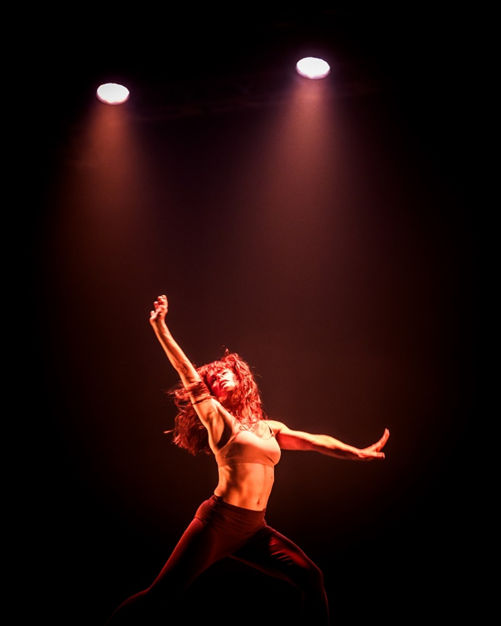
The solo "Still Here..." tells the story of my early birth and its physical and mental impact. It shows the loneliness of the birth, the locked up and the days after when the baby lies in fear and is delivered to herself. The power and wants that such a baby / baby has to have to survive, while at the same time it is not ready to leave the abdomen.
I once saw and felt these images in a session and that inspired me to make a dance about it. It also shows the strength and growth of me, to the woman I have become.
What do you want others to know about the consequences of premature birth?
The very first seconds, days, moments of contact between mother and child are the most important! Therefore, always try to hold your baby after birth, unless it fails for medical reasons. Even if it doesn't work out, make sure you get to see your own baby as a parent! Unfortunately, my mother never had this chance. That's a shame! The mother child relationship is the basis of everything in the beginning of life and this is certainly vulnerable with such a beginning.
Even though your baby is in the incubator: Touch your baby, be there for him/her, hug it, support it and build that bond with each other. The baby needs you, the parents! Even though it is there, the child can feel you, be present from your heart and give it love. You'll get there together.
Anything else you want to share?
Thank you for this platform and setting up the Adult Premature Foundation. A super beautiful and educational initiative!
Photo: Michel Schnater / Simone during her dance
Do you have any questions, or do you also want to share your experience story? That's possible! Take contact with us.
In this blog you will find various exercises that help to reduce the tension in your body and strengthen the feeling of safety in yourself.
The exercises focus on breathing, body consciousness and mental rest. This series is composed for adults born too early, but also valuable to anyone who wants to learn to relax.
All exercises have been addressed by Willemijn Klein Winkel.
Do you miss an exercise or would you like to leave one?
I hope that future prematures will have the right support they need.
Our partner Amber Bontekoe from Little girl takes a trip has given an interview to the National Health Guide. In this she tells about her experiences as adult premature and the challenges she experiences.
Her story is supported by researcher Lisette Jansen's thesis. She claims that premature birth prolonged effects mentally emotionally and socially. When a child encounters challenges at the age of two and consequently performs worse, this remains visible at a later age. This is why it is important to improve policy and care around early birth. For example, by expanding later-age studies to map premature groups.